
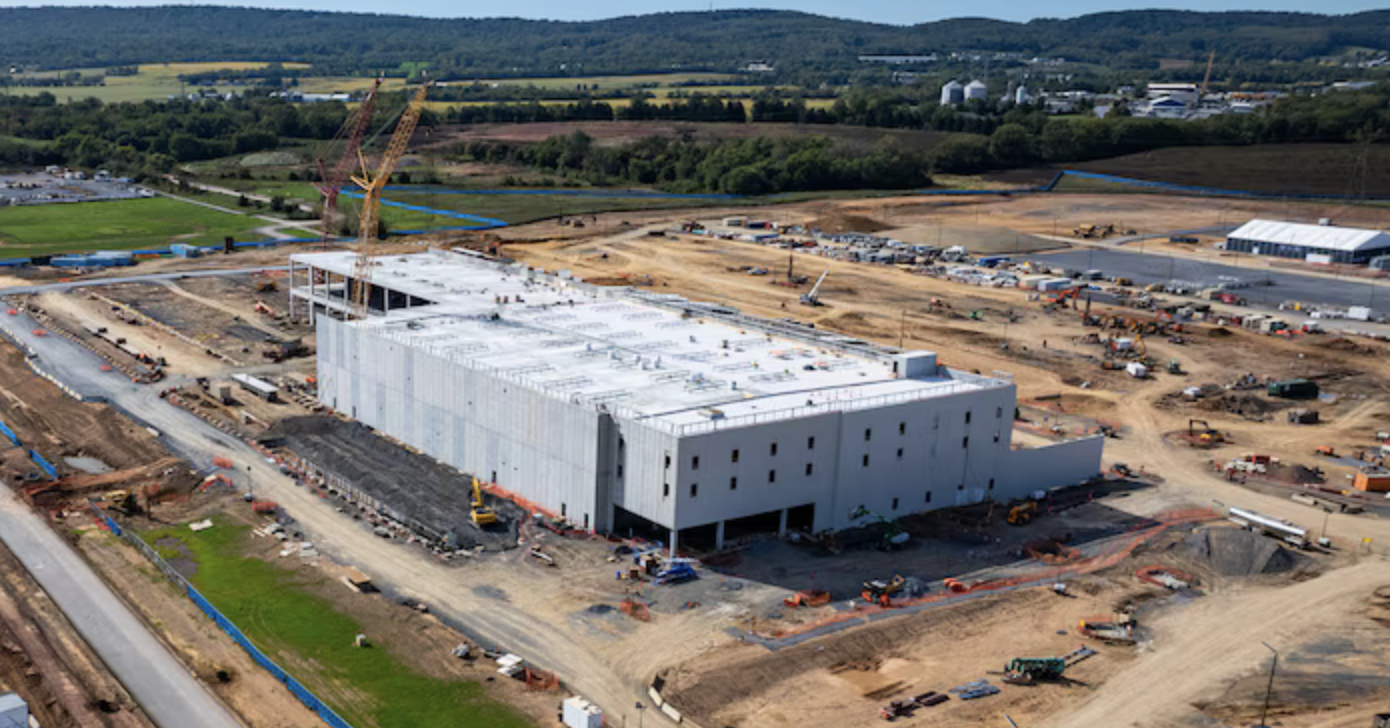
You’ve probably seen the headlines and driven past some road signs. “Data centers bring huge opportunity” or “Say no to data centers.” The Maryland legislature just overturned Governor Moore’s veto of the data center study bill. There is a proposal to adaptively reuse the Landover Mall for a data center, and a corresponding Change.org petition to stop it with 22,000 signatures. Why are people on alert and what is the big deal about data centers?
What is a data center?
Data centers are buildings that house computer infrastructure such as servers, commonly referred to as “the cloud,” that store, process, and transmit data. The infrastructure powers everyday digital activities such as emails, ecommerce, streaming, gaming, financial services, artificial intelligence, etc. We’ve had data centers for decades, but the term was not heard very often until a few years ago. According to the Brookings Institute, the reason is the rapidly accelerating growth of generative artificial intelligence (AI), with large companies like Amazon, Meta, Google, and Microsoft, driving the increase of data center development to keep up with digital demands. In the 2025 McKinsey Global Survey, 88% of businesses reported using AI in the last year, up from 55% in 2023. AI disclaimers are becoming more common, even in historic preservation work, such as the one seen in the Durkeeville Revitalization Study for the City of Jacksonville, FL, where the authors notated how AI was used to summarize information and visualize concepts but not for historic research. Broadly, consumers are hungry for it, as more people use ChatGPT now than Wikipedia.
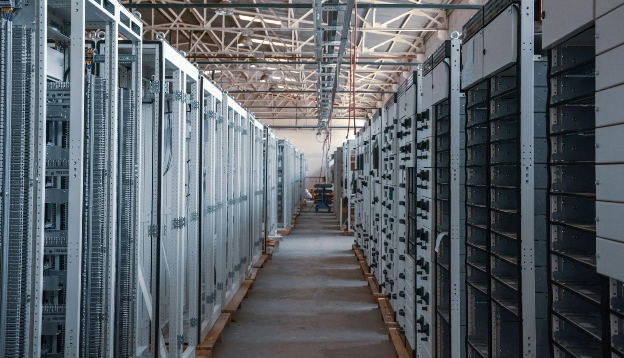
Caption: Interior of a data center. Creative Commons License
How many are there and what’s the big deal?
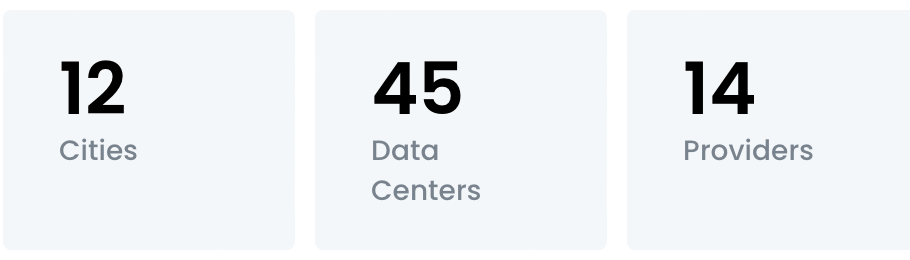
The U.S. is the world leader in data center locations. According to Datacentermap.com, as of December 2025, there are 4,303 data centers in the U.S.. Virginia has the most with 668, followed by Texas with 429, and California with 326. In fact, Virginia has more data center locations than any other nation in the world – Germany comes in second with just over 500. Maryland has a reported 45 data centers, with the largest concentration in Frederick County. The growing demand for data centers is intense and there are numerous factors to consider in assessing their impacts in Maryland.
- Environmental Concerns
Data centers require energy and water, and depending on the size of the facility, huge amounts of each. A recent article by the Lincoln Institute of Land Policy described data centers as “resource-ravenous.” A mid-sized conventional data center requires as much water every day as a city of 50,000 people to cool the hardware and a “hyperscale” AI-focused data center can use as much power as 100,000 homes. Transparency around data center energy and water use is lacking, as most companies do not share energy or water consumption and are not subject to reporting them. Depending on the design, and required regulations, data centers can be “green,” as Amazon has committed to 100% renewable power for its data centers in Germany by 2027. Considering the majority of U.S. electricity comes from fossil fuels still, and intermittent renewable energy like wind and solar cannot fully power the 24/7 data center operations, it’s hard to imagine how data centers could contribute to a more sustainable future.
- Infrastructure Expansion
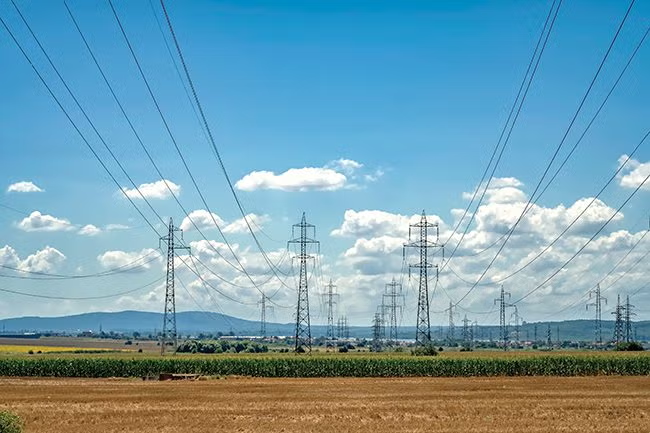
The hyperscale data centers require huge parcels of land and need to be located nearby other energy infrastructure, which often pushes them towards rural or edge-of-town locations. Beyond the building site itself,which many local jurisdictions have authority over, other impacts such as new transmission lines, substations, and utility corridors are less in local control, and can impact natural habitats, agricultural resources, and historic resources. Transmission lines are tall, imposing structures that drastically alter the visual landscape, and Preservation Maryland has written previously about the proposed MPRP. In 2024, the Wilderness Battlefield in Virginia made the National Trust for Historic Preservation’s 11 Most Endangered because of threats of data center development. The growth of data centers is driving an unprecedented surge in electricitydemand nationwide, adding more concern on top of existing friction to provide improved energy generation and delivery on an aging power grid system. PJM estimates data center load in was only 4% in 2024, but will reach 12% by 2029 and 16% by 2039. Because of Maryland’s geography, located between #1 energy exporter state Pennsylvania and #1 energy importer state Virginia – we lie in the crosshairs.
- Sense of Urgency
Those in the tech industry are concerned we are underbuilding data centers and cite the economic need for AI. Kelly Schulz, CEO of the Maryland Tech Council, recently stated their concerns with impediments to data center development in an Axios article, “There are billions of dollars that are going to be invested somewhere…It’s the timing that really puts this industry at risk.” In 2025, Nvidia, a California-based company that makes products involved in AI, was the main engine of the nation’s stock market growth, accounting for 19.3% of the 20% S&P 500 gain. Nvidia is also recognized as the most valuable company in the world. If AI is dominating our economy, does it need to dominate our physical landscape as well?
- New Frontier in Local Zoning
The rapid growth of AI and data centers has made it challenging for local communities to decide where to allow, disallow, or encourage the use. Most zoning codes do not define or regulate data centers, as historically the use have been lumped in with industrial or office uses. The expansion of AI has led to a push for hyperscale data centers, a use with implications far beyond the data centers of the early internet-era. Many jurisdictions are taking an informed approach to integrating data centers into local regulations. Frederick County just passed a Critical Digital Infrastructure Overlay Zone (CDI-OZ) restricting data centers to a designated geography. Prince George’s County just published a robust report with recommendations to encourage data centers in brownfields and require a sustainable operations plan among many other items. The need to address large-scale data centers in ordinances is only going to continue to escalate.
- How to Advocate on the Issue
It’s clear that data centers are coming to town and they’re coming rapidly. If you “Ctrl +F” your local ordinance and do not see the term, it’s time to start asking questions to your planning officials. To push for best outcomes for your community, get involved with or ask for a jurisdiction wide planning effort to define and regulate data centers. GIS analysis of sensitive resources, including historic resources and landscapes need to be on the map. Listing on the National Register of Historic Places is honorific, local designation of historic and cultural resources provides the best protection against inappropriate development. While a 462-page report like Prince George’s County might be out of scope for your community, a community-centered planning effort to map out where data centers could go such as on brownfields and along existing transmission linesmakes common sense. If a data center development applies to build in your area, ask for transparency in the public utilities required of the site – just as apartment developers have to cite how many apartments they will build to determine their water usage – so should data center builders on the amount of water and electricity they need. Don’t be afraid to ask for mitigation funds to direct monies to local community benefit projects. Since AI is fueling an increasingly digital world, a suitable use of mitigation funds would be towards supporting the analog world such as historic preservation, outdoor recreation, and land conservation.
Conclusion
The term data center has become synonymous with hyperscale AI, and the environmental, energy, and health impacts are potentially huge. Residents and communities are struggling with the challenges to address and regulate a rapidly growing industry where the full consequences are unknown. We are in an era when data centers are critical for our everyday digital lives, as described by Chris Bair of Stream Data Centers, but these facilities must be responsibly built and operated. While we wait for the results of the upcoming data center study bill – it appears to us – if Maryland wants to meet its net-zero carbon emissions by 2045 goals, or reduce reliance on out of state power, encouraging more data centers without regulations is not the right move. Maryland, because of our legacy of environmental and Smart Growth leadership, and our neighbors Virginia and Pennsylvania vying to connect across us, could set the standard for sustainable data centers.