
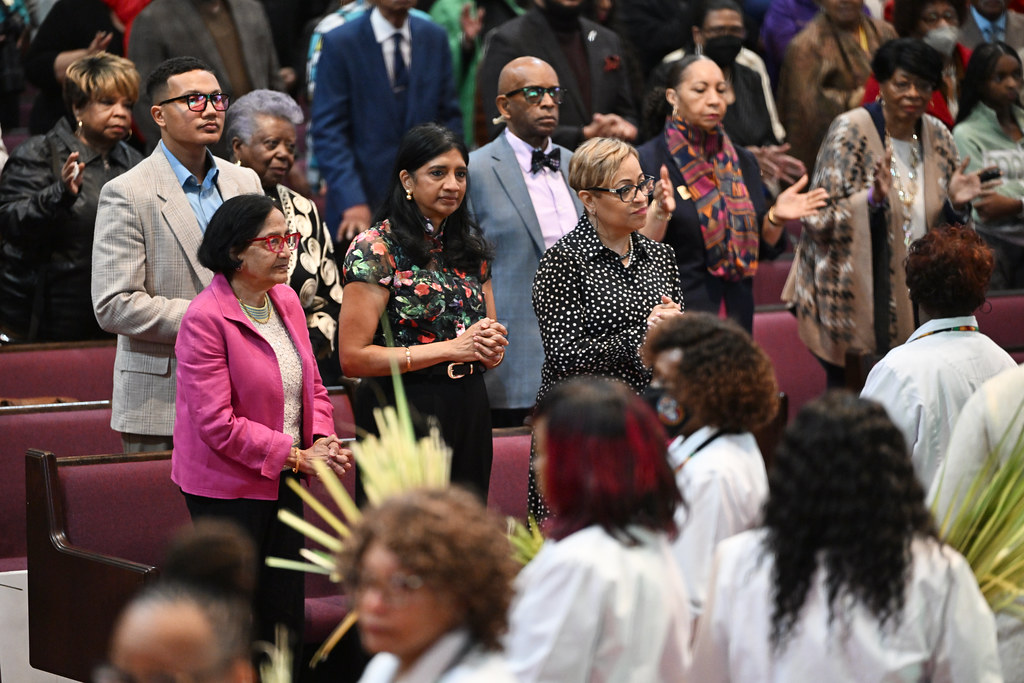
Maryland’s history as a proprietary colony founded for religious freedom contributes to its rich collection of historic religious sites. Today, faith-owned properties dot the Maryland (MD) landscape to the tune of over 37,000 acres. Religious facilities are key community assets, directly support working families, providing essential services like childcare and food pantries. Most congregations have a mission to serve others, and research shows nearly 90% of households who benefit from congregational support services are non-members. This concentration of faith-owned properties positions them as drivers for both preserving MD’s heritage, catalyzing economic growth, and addressing the housing shortage. Following in the footsteps of other states like Colorado, Massachusetts, and Virginia, we were curious to dig deeper to understand how much of an impact faith-owned property would make towards housing opportunity in MD. This is a second blog on Yes in Gods Back Yard (YIBGY) for Maryland expanding on our previous research, see our last blog post for an introduction to the topic.
Faith-Owned Land in Maryland
Using the State’s Open Data Portal, Smart Growth Maryland staff determined there are over 11,000 properties that are faith-based exempt properties, cumulating in nearly 37,000 acres. The cities of Baltimore, Silver Spring, Cumberland have the largest number of congregation-owned properties, while Silver Spring, Upper Marlborough, and Germantown have the most acres of congregation-owned land. We then sliced the dataset down further, isolating to Priority Funding Areas and removing land classified as cemeteries that are not suitable for redevelopment.
The results show that in Priority Funding Area (PFA), there are nearly 8,000 faith-owned properties covering over 15,400 acres. Often, there is extra space on those properties not taken up by a sanctuary, synagogue, fellowship hall, or parish office. When accounting for existing buildings on those properties and underutilized land, at just a conservative 30% lot coverage, there is over 180 million buildable square feet of area on faith-owned land. If developed at a medium density of 15 units per acre (single-family, duplex, triplex, quad, etc.) this could provide 62,200 units of housing — a number which could fill 11% of the stated housing gap of 590,000 units by 2045.
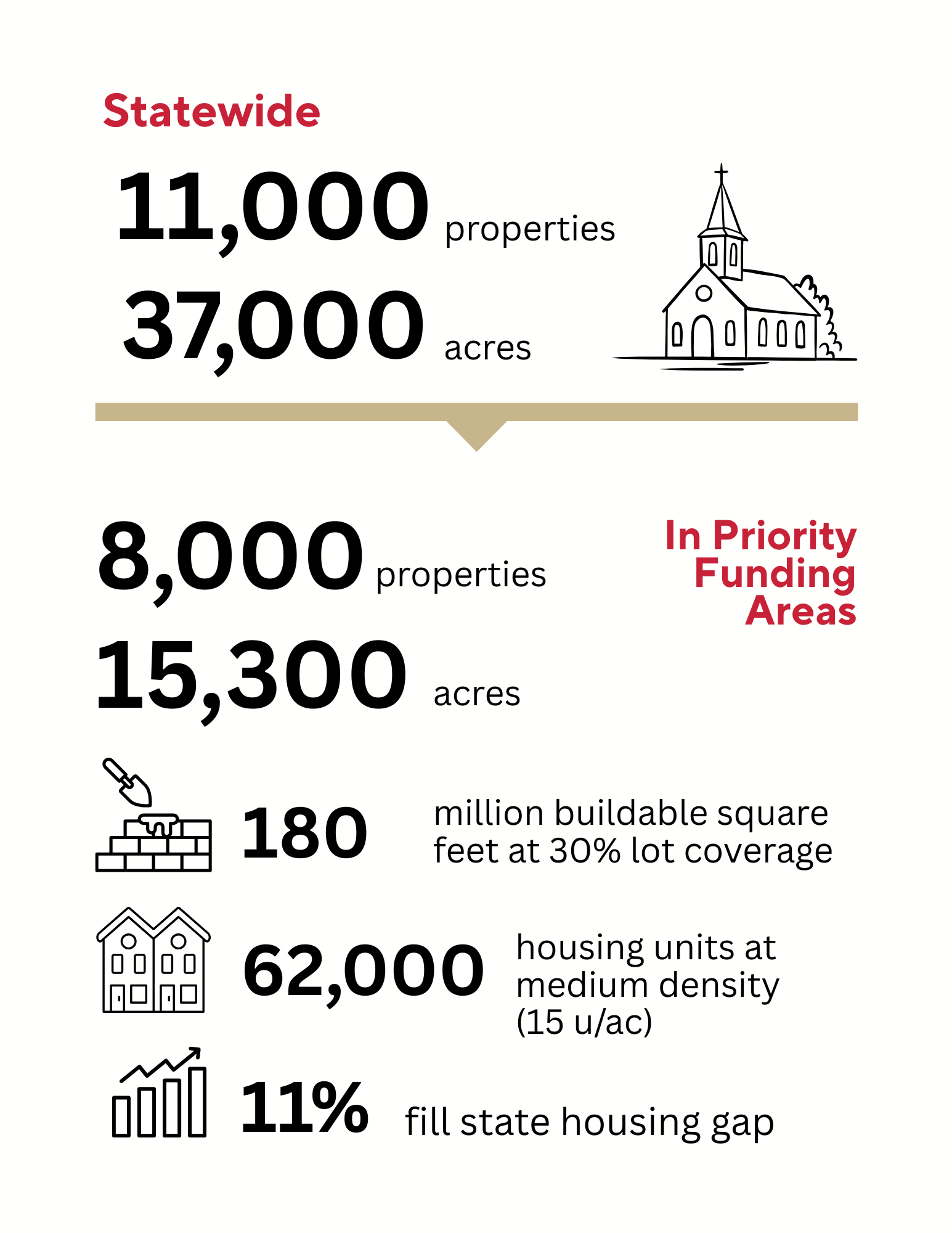
Smart Growth Maryland analysis shows potential for faith-owned properties to fill the state housing gap even at very conservative density assumptions.
Sometimes faith-institutions have additional lots, maybe it’s used as overflow parking or simply was bought as a buffer at some point in time. There are over 2,000 faith-owned properties that are vacant undeveloped land without a structure in our analysis. If all those 2,400 acres were developed at a medium density, it could result in 36,000 housing units. The largest concentrations of faith-owned undeveloped land are in Baltimore City (134 acres), Towson (108 acres), and Bowie (97 acres).
While these numbers sound promising, it still underrepresents the true opportunity of faith-owned properties to contribute to the housing crisis, as the analysis above doesn’t account for adaptive reuse of existing buildings. In situations where a congregation has dwindled, buildings like educational classrooms are great candidates to be rehabilitated into housing. Sanctuaries are more difficult but not impossible to split up into housing. If YIGBY really took off in MD, it could make a real difference in addressing the shortage of housing units statewide.
The Challenges
What’s stopping congregations from developing housing on vacant land or adaptive reusing underutilized buildings? For one, many faith-institutions are in single-family only zoning or low-density residential which limits the types of housing that can be built. Virginia has attempted to answer this question through the HousingForward Virginia and the work of the National Zoning Atlas. Thus far in MD, only 19% of jurisdictions have been analyzed in the National Zoning Atlas and therefore a statewide dataset that illustrates the number of housing units allowed per acre is not currently available. Second, many congregations lack real estate development knowledge or capacity, and congregational governance can be slow to make decisions. Third, financing or legal structures may be an issue as some funders cannot lend to religious institutions.
The following hypothetical examples demonstrate some of the challenges for YIGBY in MD:
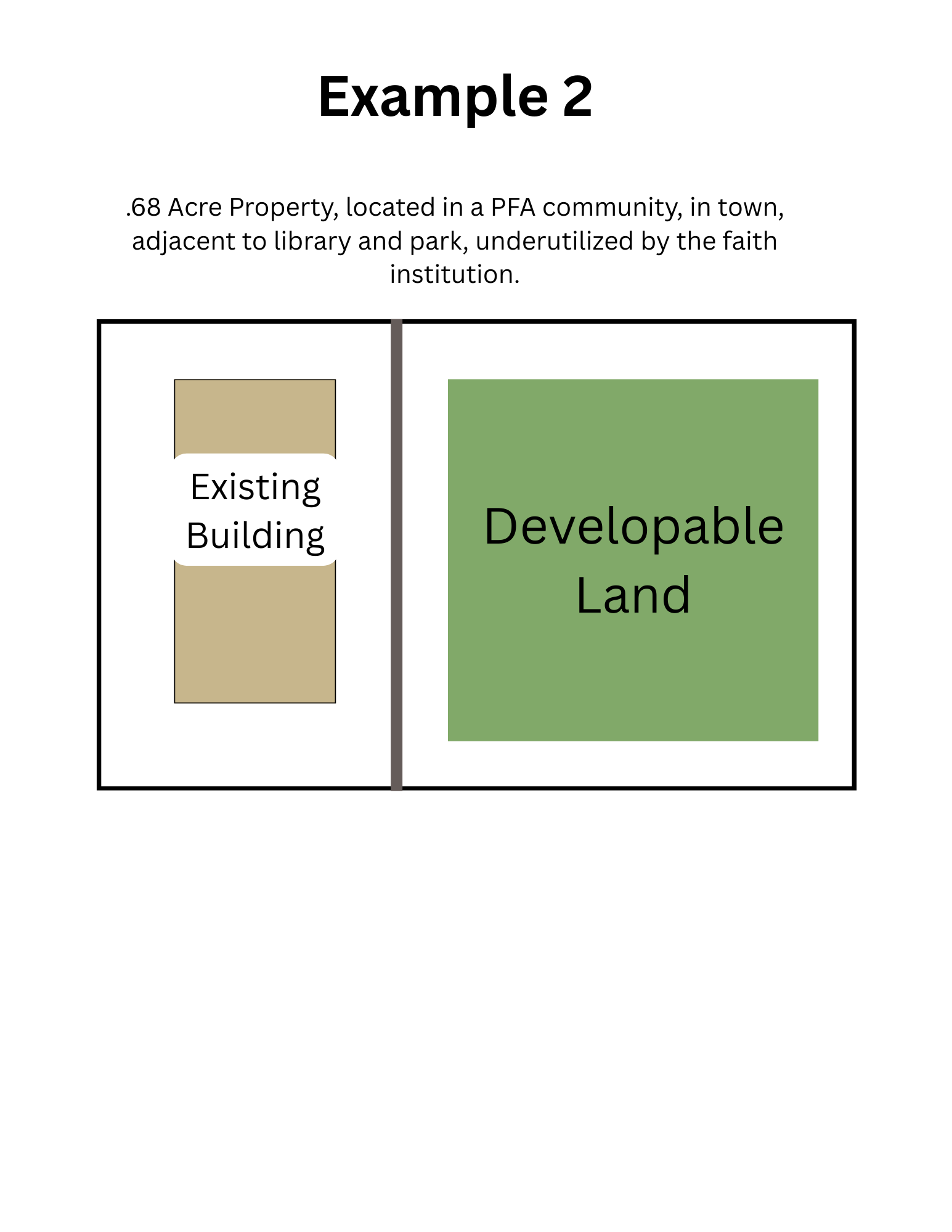
Example 1: A large church in a Priority Funding Area (PFA) suburban neighborhood adjacent to housing takes up a small portion of the 18-acre property. The property is in R5 zoning which only allows single-family detached up to 5 units per acre. If a third of the property were developed for housing, approximately 30 housing units could be built.
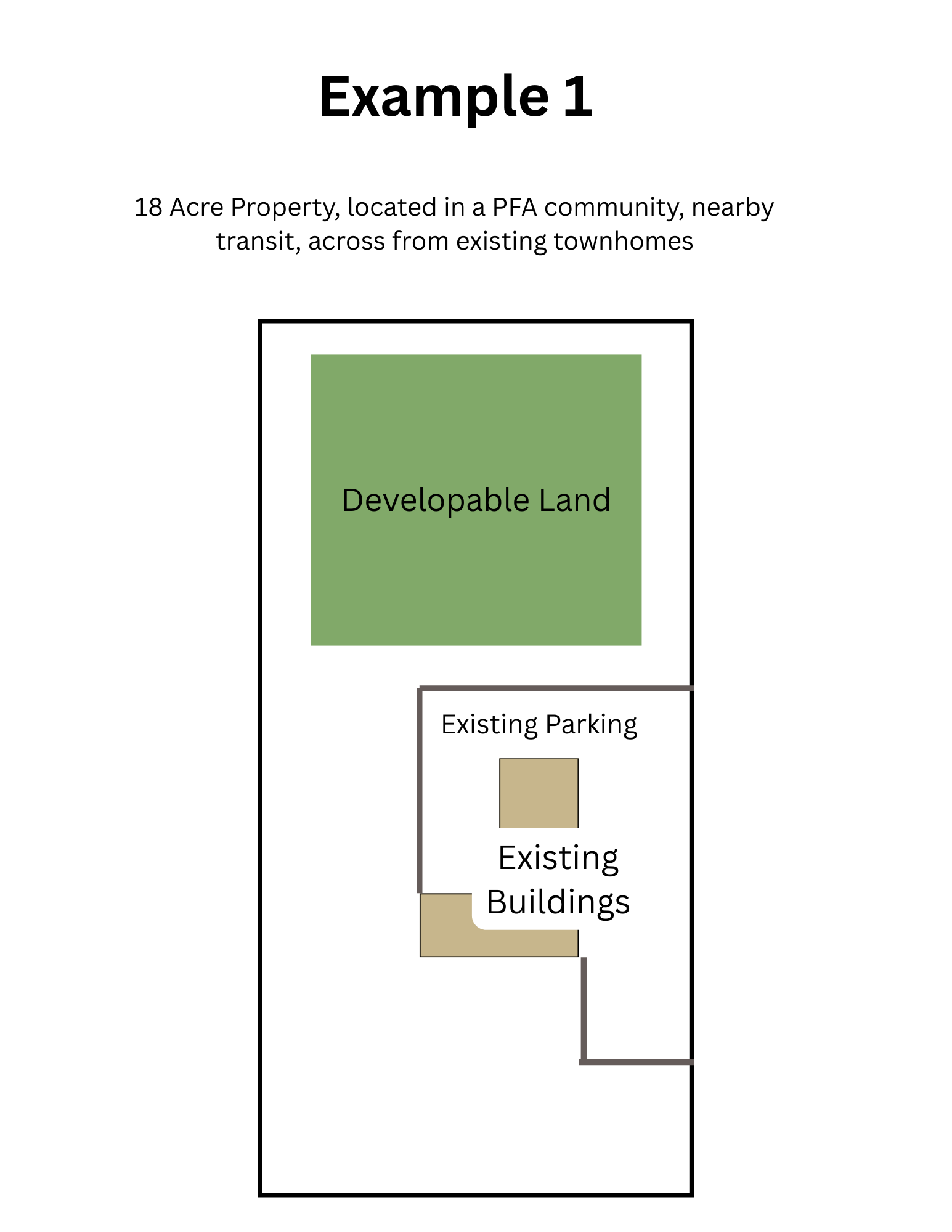
Example 2: A church in a small town owns multiple properties, utilizing the vacant lots as parking. Attendance has dwindled over the years and they no longer fill up the lots with cars during services. The church is adjacent to a park and library, ideal for housing. One lot, at just .086 acres, could be redeveloped as a duplex, but the property does not meet the minimum lot size requirements at 6,000 sqft. The owner would need to apply for a variance from the Board of Appeals for lot width and area and the outcome is uncertain.
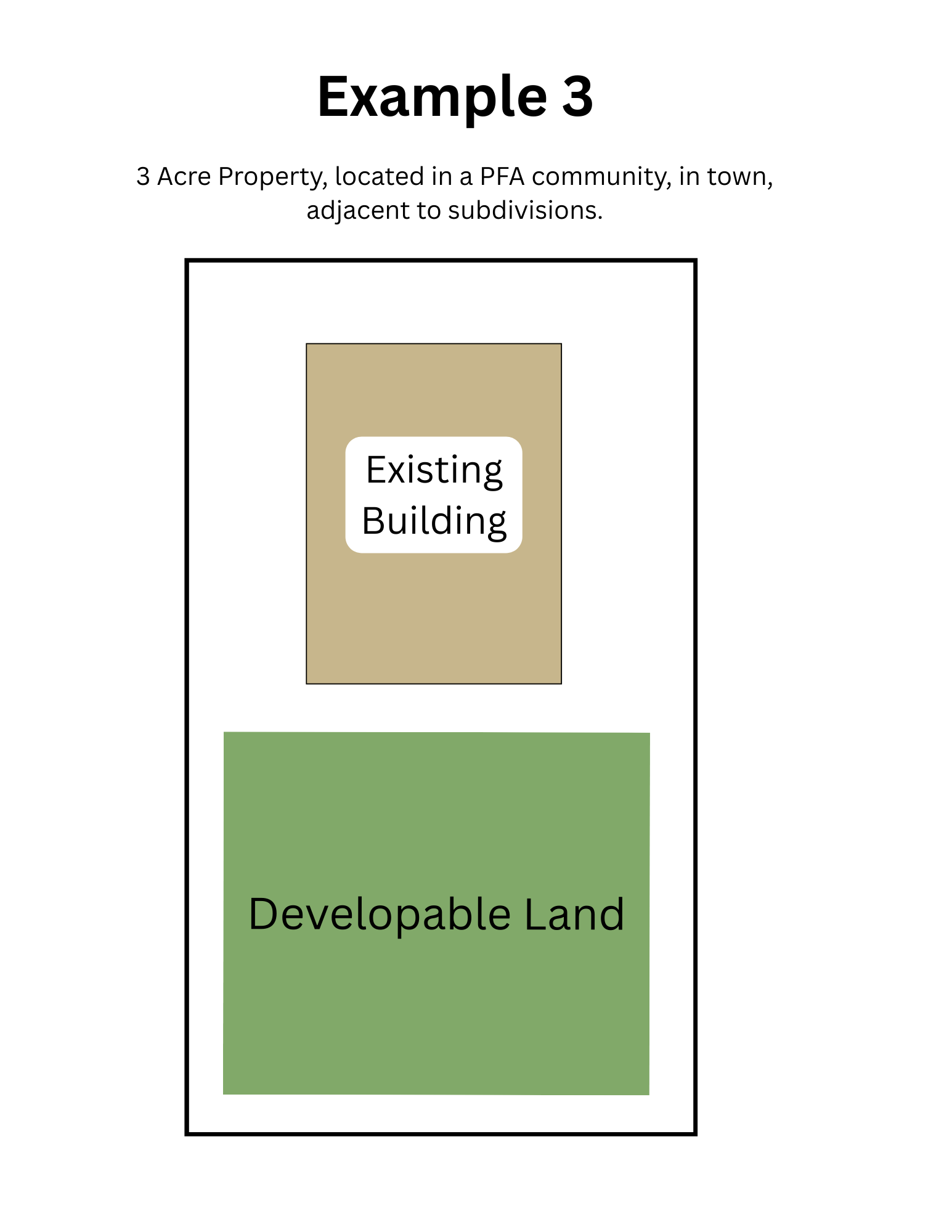
Example 3: A 3-acre property located in town, in a PFA community, adjacent to subdivisions and townhome developments. Approximately 2/3s of the property is in use as the congregation’s building/parking lot, but 1/3 at the rear of the property is vacant. The property is in a high density suburban residential zoning district, however, only single-family detached is allowed by-right, all other residential types allowed (attached, townhouse, multi-plex, garden apartment, etc) require a public hearing and additional fees in front of the Planning Commission and the outcome is uncertain.
Unmeasured Potential
Although building on underutilized land is one path for faith-owned property to contribute to the housing shortage, there are millions of square feet of buildings owned by faith institutions in PFAs in Maryland. One unanswered question is how many of those structures are vacant and underutilized, and candidates for adaptive reuse. Religious buildings, depending on the size and scale, can be easy to very difficult to adaptively reuse. Yet it’s not impossible, and it takes collaboration, dedication, and resources. In 2023, a historic church in Highlandtown in Baltimore was converted into 10 live/work units. It doesn’t all have to be housing either, as UNITE Mount Vernon, acquired a 153-year old Norman Gothic-style church in Baltimore City, with plans for a multi-purpose community activation of the large building. As struggling congregations grapple with finite financial resources and larger historic buildings to maintain, the opportunity to share space, adaptively reuse, or build new on the parking lot offer additional revenue streams for the institution that should not be overlooked.
What Can Be Done?
All levels of government who are working to address the housing crisis can play a catalytic role in encouraging faith-owned property to be used in this way. The issue of the local zoning restrictions is one that usually must be addressed by each jurisdiction, such as Montgomery County did in 2024 allow multi-unit housing for qualifying institutions for affordable projects. The efforts of congregations like Silver Spring United Methodist Church, recently one of thirteen projects statewide awarded Low Income Housing Tax Credits, are commendable, but the project still has to go through rezoning locally to come to fruition. Individual rezoning – even for noble reasons like affordable housing – is not a certain path in any jurisdiction. A project for senior affordable housing by a faith-institution in Atlanta, GA was just opposed by the local planning council over concerns about traffic and parking.
To aid in pre-development activities, the state or local jurisdictions could fund technical assistance and feasibility grants specifically for congregations, and provide a centralized technical assistance hub that offers pro forma support, legal templates such as ground leases and RFPs, and capacity-building services for faith communities interested in housing development. Models like Charlotte, North Carolina’s “Faith in Housing” initiative demonstrate how combining technical assistance with matchmaking can help congregations move from early ideas to action.
At the same time, the state can reduce uncertainty by educating and clarifying tax treatment – affirming that long-term ground leases with developer partners or the creation of a separate nonprofit or community development corporation to develop housing do not automatically jeopardize a congregation’s tax-exempt status. The state can further support these efforts by establishing loan guarantees or bridge funds that flow through secular intermediaries, such as CDFIs or nonprofit sponsors, to make projects on faith-owned land more bankable, building on existing examples and toolkits developed by LISC.
Conclusion
Faith-owned land presents a significant, mission-aligned opportunity to address Maryland’s housing shortage. Congregations are well positioned to help deliver much-needed housing, and often in locations where it is most needed like our Priority Funding Areas. While zoning barriers, capacity gaps, and financing challenges remain, targeted policy reforms, technical assistance, and supportive financing tools could unlock this potential. Yes In God’s Back Yard is not a single solution, but with intentional action, it can become a meaningful part of MD’s strategy to expand housing opportunity while strengthening both congregations and communities.