
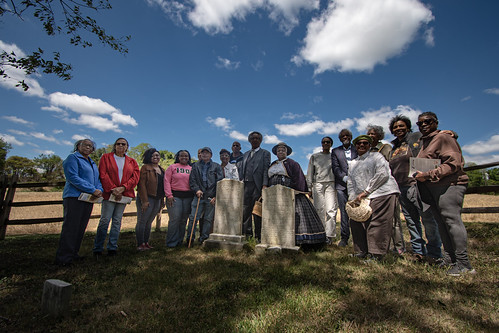
On May 15, 2026 Maryland Department of Natural Resources officially dedicated a new state park that preserves and interprets one of the most powerful stories of freedom, resilience, and Black leadership in our state’s history.
Freedman’s State Park now protects more than 1,000 acres connected to the Howard family, whose story spans enslavement, emancipation, land ownership, community leadership, and civil rights advocacy. The park preserves landscapes once owned and stewarded by Enoch George Howard and Harriet Howard, whose determination reshaped not only their family’s future, but Maryland history itself.
Preservation Maryland is helping lead the development of the newly designated Freedman’s State Park in Montgomery County, guiding several core initiatives, including development of the park’s concept-level master plan, which will shape land conservation strategies, passive recreation opportunities, and approaches to historic interpretation. Preservation Maryland also previously commissioned a Cultural Landscape Report (CLR) to identify areas of archaeological sensitivity and help inform long-term preservation planning for the site.
Preservation Maryland was honored to join the Maryland Department of Natural Resources, the Maryland Park Service, descendants of the Howard family, and an extraordinary coalition of partners in celebrating this important milestone.
Prior to the Civil War, Enoch George Howard was enslaved by the Gaither family in Montgomery County. Through farming skill and business acumen, he earned and saved enough money to purchase his own freedom, then the freedom of his wife Harriet, their children, and eventually the very property where members of his family had once been enslaved. In 1862, during the Civil War, Howard purchased the Locust Villa plantation property, fundamentally transforming a landscape tied to enslavement into one rooted in freedom, ownership, and opportunity.
That story deserves preservation not only because of its historical significance, but because it reshapes how we understand Maryland itself. At the dedication ceremony, speakers reflected on the importance of preserving places that tell fuller and more honest stories of the American experience. As Maryland Park Service Director Angela Crenshaw noted, visitors to the park can now “walk in their literal footsteps on this land where they made history.”
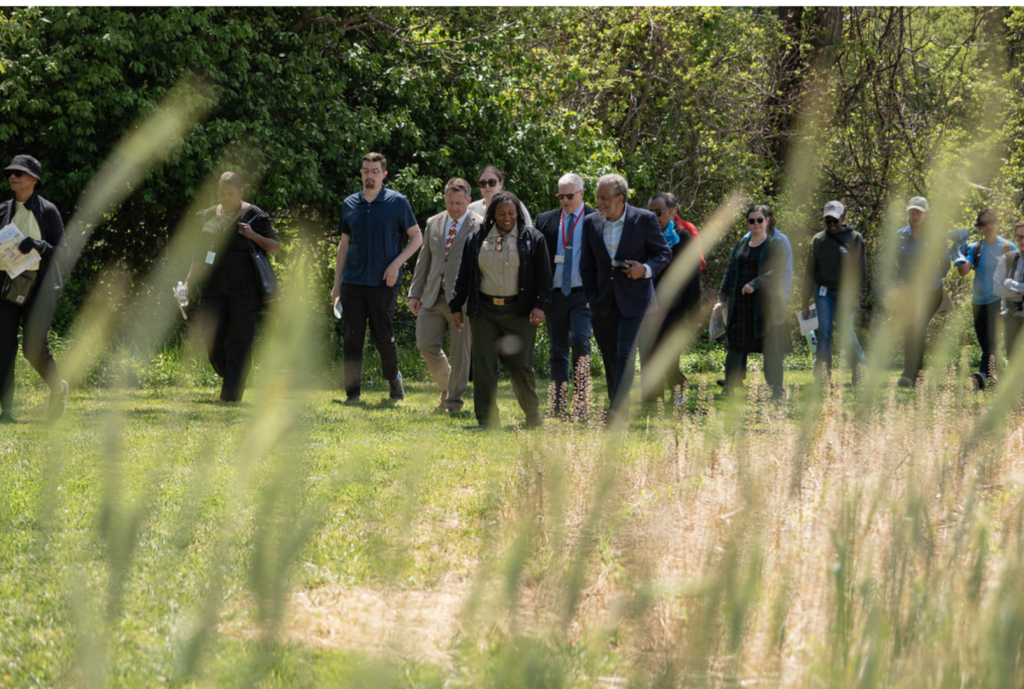
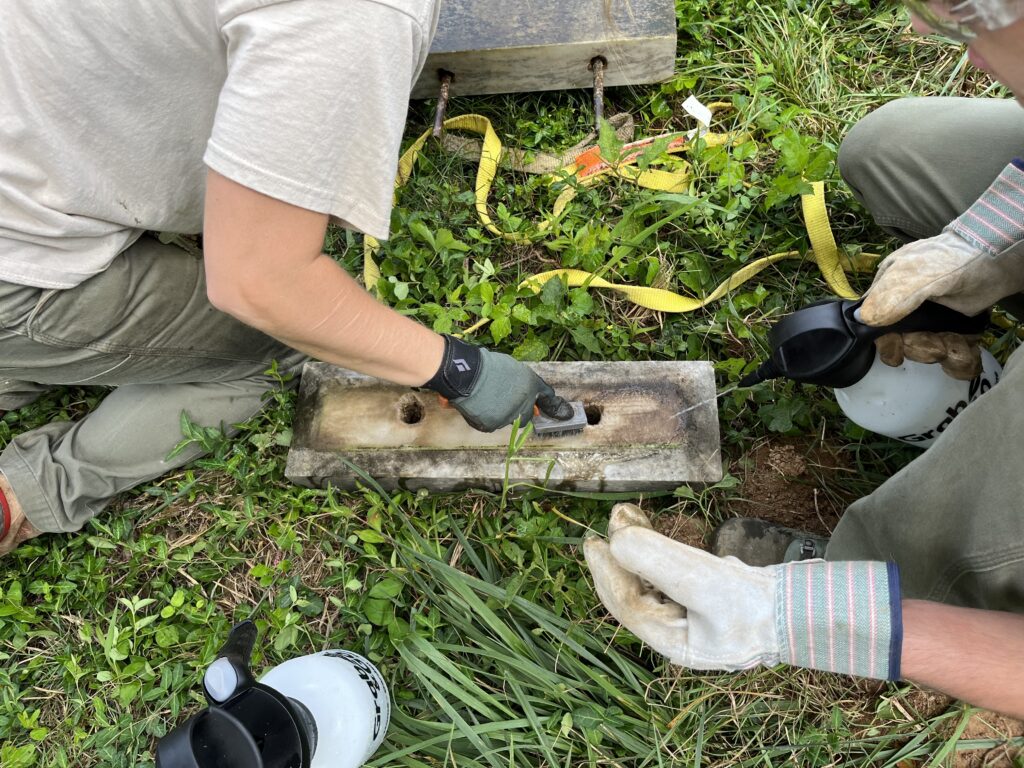
The park includes the Howard Family Cemetery, Howard Chapel Cemetery, the ruins of Locust Villa, and the Greenbury Howard House, which is currently undergoing restoration. Archaeological investigations across the property continue to uncover details about the Howard family and the community they built after emancipation.
Freedman’s State Park represents more than the addition of protected acreage to Maryland’s park system. It reflects a broader commitment to preserving places connected to Black history, emancipation, and community building — stories that are essential to understanding both Maryland and the nation.
As the park develops, future visitors will be able to experience trails, landscapes, historic sites, and interpretation that connect the natural environment with the people who shaped it. These are the kinds of places that remind us preservation is not only about buildings or artifacts, but about protecting stories, memory, and cultural landscapes for future generations.
We thank the Maryland Department of Natural Resources and the Maryland Park Service for their leadership and stewardship in bringing this vision to life, and we look forward to continuing this important work together.