
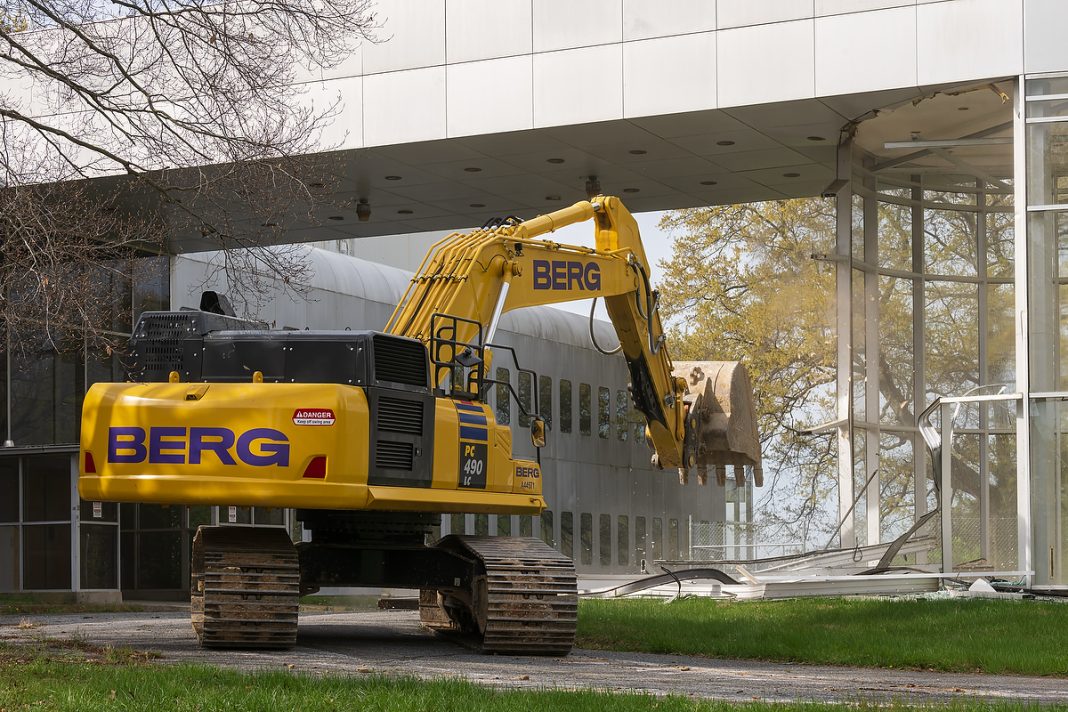
Marylanders recently learned that the COMSAT building – a midcentury modern landmark for thousands of commuters along I-270 – would meet its ultimate demise at the end of the bulldozer’s blade. The long vacant building had been the source of concern and challenge for preservationists and planners for decades since its last tenant departed. Despite the unquestionable value of the unique and stunning midcentury architecture, the structure’s challenging siting, design, and materials ultimately made its reuse a highly challenging economic proposition according to a county-commissioned study.
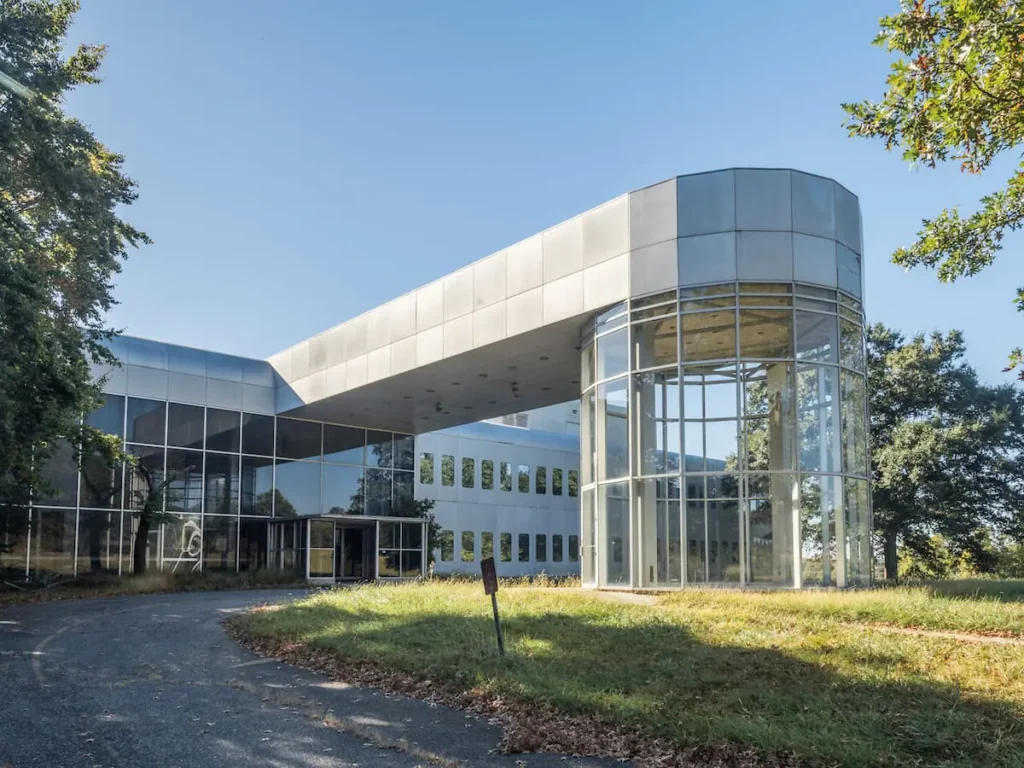
As preservationists, this is not the outcome we wanted.
The reality, however, is that as the nature of historic architecture changes, so must our tools and resources. Simply put, as buildings of the 1960s, 1970s and soon the 1980s become eligible to be designated as historic, we require additional resources to help save this new era of structures.
In the 1960s, as preservation came of age and the National Historic Preservation Act was passed into law, that generation was also concerned about the recent past – the landmark battle over Penn Station in New York City centered around a building just 53 years old. For preservation to succeed now to save our own recent past, we must be willing to think anew to address a similar challenge.
For starters, that means providing more flexibility around modern materials and their replacement. In recent years there have been increasing calls for even modest updates to the Secretary of the Interior’s Standards to address these concerns – and those calls must be answered either through regulatory action or law if the agencies fail to act.
Additionally, Maryland’s counties and municipalities need more support to help survey, document, and list significant structures of the recent past on the National Register of Historic Places. This isn’t just a function of bureaucratically identifying what’s important – it also provides these structures with a pathway to access local, state, and federal historic tax credits and grants. Given the challenge of rehabilitating a structure built with modern and sometimes challenging or toxic materials, these credits are not a subsidy – they are critical to the survival and reuse of these structures.
Which leads us to perhaps the most important resource – more state historic tax credits. Unlike nearby Virginia which has an uncapped historic tax credit program – Maryland’s program is capped at a paltry $19 million annually, as of FY27. By comparison, Virginia routinely invests nearly $100 million annually – activating a revitalization industry that has spurred the renaissance of numerous communities large and small throughout the Commonwealth.
By every measure, Maryland’s program has fallen behind Virginia and other peers along the Atlantic seaboard. With so few credits available, many challenging projects, like COMSAT, fall by the wayside as developers are unwilling to compete for limited funding in such a competitive environment.
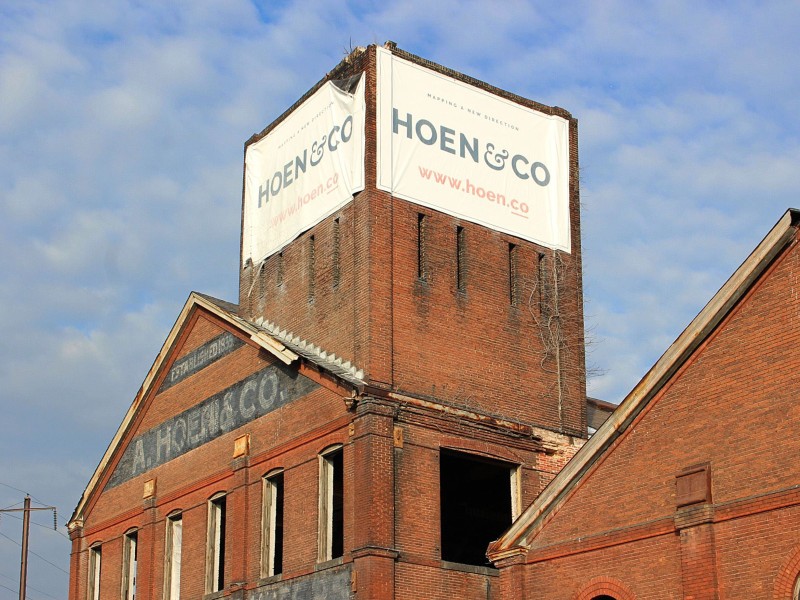
In short, we need more flexibility in reuse, more support for surveys and documentation, and more tax credits to get challenging projects across the finish line.
When Maryland launched its historic tax credit program in 1997, many communities in the state would not have qualified as eligible due to the commonly observed 50-year rule on the age of construction. Fast forward 30 years, and now a structure or community established in 1976 could easily be recognized as historically significant. In practice, this means that the core suburbs of the DC and Baltimore metro regions stand to gain equally from a more robust historic tax credit program – and not just to save history – but also to help create more abundant housing, catalyze economic redevelopment, and sustain local tax revenues.
Maryland is unique. Our historic architecture spans the momentous and iconic from the colonial to the post-modern. Just as our landscape is America in miniature, so is our built environment. Our job as preservationists is to make sure our communities are empowered with the latest tools and knowledge to save what makes Maryland, Maryland.