
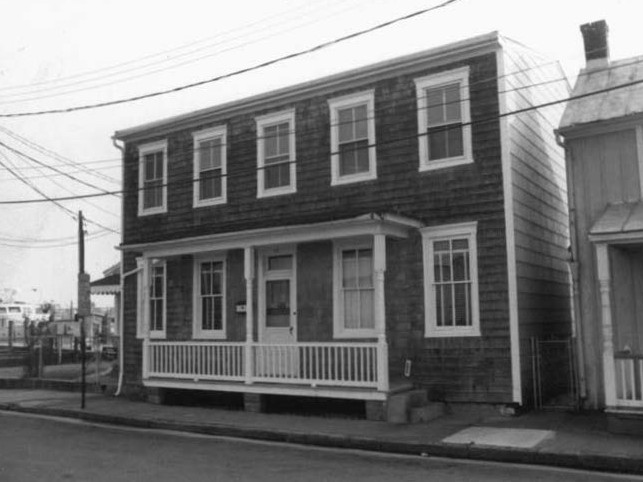
City of Annapolis to Lead Remaining Rehabilitation and Site Work
Statewide nonprofit Preservation Maryland announced the successful completion of its phase of work on the historic Burtis House, located at 69 Prince George Street in Annapolis. This milestone marks a critical step in safeguarding one of the last waterman’s cottages of its era and advancing the broader vision for resilience and revitalization at the Annapolis City Dock waterfront.
Phase 1: Stabilization & Flood-Damage Remediation
In Phase 1, Preservation Maryland led essential stabilization efforts at the Burtis House, a structure deeply tied to the city’s working waterfront heritage. The work included:
- Raising the historic structure using jacks and cribbing to mitigate flood and sea-level rise risks.
- Repairing and replacing compromised materials caused by long-term water damage and moistureinfiltration.
- Applying weatherization techniques to protect existing historic fabric as the house awaits the nextphase of work.
- Engaging architectural, engineering, and construction partners to document and execute the workaccording to historic preservation standards.
With these crucial steps complete, the Burtis House is now structurally stable and protected from immediate threats, priming this irreplaceable historical resource for the next stages of rehabilitation and reuse now to be led by the City of Annapolis.Hand-Off to the City of AnnapolisWith Phase 1 completed, Preservation Maryland has officially handed the project over to the City of Annapolis, which will lead implementation of the remaining work. Once complete, the Burtis House will serve as a vital interpretive and functional space at City Dock.
“Preserving the Burtis House is about more than saving a building — it’s about protecting the story of Annapolis’ working waterfront and the people who shaped it,” said Laura Houston, Director of Revitalization Initiatives at Preservation Maryland. “With Phase 1 complete, the City now has a secure base from which to bring this piece of community history back to life and ensure it stands as a symbol of resilience and maritime history for years to come.”
This work would not have been possible without the generous support and collaboration of key partners and funders:
- Architectural, engineering, and construction teams, including HD Squared Architects, Barton Ross & Partners, Silcox Engineering & Drafting, Bay Engineering, Richard Hammond Builders and Expert House Movers.
- Project funders, include Maryland Heritage Area Authority (MHAA), National Park Service Chesapeake Gateways Program, and the State of Maryland.