
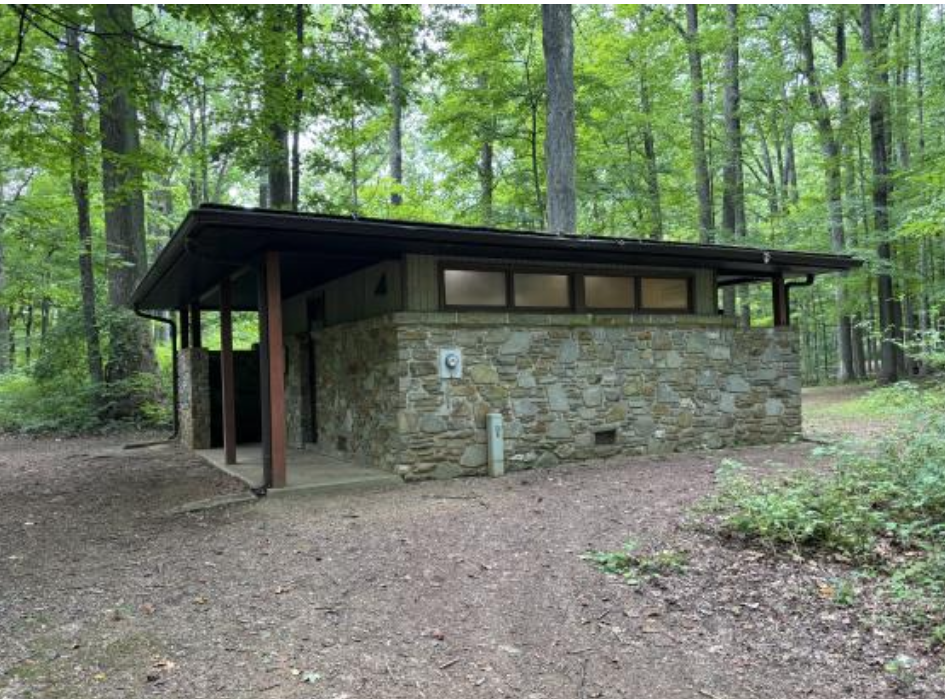
Preservation Maryland is pleased to share an update on a project being undertaken in partnership with the Maryland Department of Natural Resources (DNR) to document and better understand Maryland’s Mid-Century-era state park resources. Building on previous statewide surveys that focused on pre-1945 cultural resources and New Deal-era state park development, this new project expands that work by examining the Park Service Modern buildings, landscapes, and infrastructure constructed between approximately 1950 and 1980. These resources represent a significant period of growth for Maryland’s State Park system, when federal Great Society funding helped create new recreational opportunities and modern visitor facilities across the state.
Following a competitive selection process, Preservation Maryland has retained John Murphey of Architectural History Services to lead the survey and historic context study. Over the next year, Murphey will conduct intensive-level documentation of significant resources at Cunningham Falls State Park, Greenbrier State Park, the Hammerman Area of Gunpowder Falls State Park, and the McKeldin Area of Patapsco Valley State Park. The project will include field surveys, preparation of Maryland Inventory of Historic Properties (MIHP) forms, determinations of eligibility for the National Register of Historic Places, and a comprehensive historic context report examining the development of Maryland’s Park Service Modern architecture and landscapes.
This work is especially important because many of these mid-century park resources remain largely undocumented, even as they face increasing pressure from renovation, changing park management practices, and the passage of time. By identifying, recording, and evaluating these historic places now, the project will provide valuable information to support DNR’s stewardship of Maryland’s state parks and help guide future preservation and planning decisions. The resulting research will benefit Marylanders by ensuring that the buildings, landscapes, and recreational facilities that shaped generations of outdoor experiences are better understood and protected for future visitors.