
Two hundred fifty years ago, a Baltimore postmaster printed the Declaration of Independence, a general in Annapolis handed back the very power he’d fought to win, and the “self-evident” truth that all men are created equal was left for every generation since to argue over, claim, and expand.
We explore these ideas in Revolution@250, a special production of PreserveCast (Preservation Maryland’s long-running podcast) created in partnership with the Maryland Center for History and Culture (MCHC). Episodes are co-hosted by Katie Caljean, President & CEO of MCHC, and Nicholas Redding, President & CEO of Preservation Maryland and the regular host of PreserveCast.
The Series
The series takes its cue from a letter John Adams wrote in 1818, four decades after the fighting began. Reflecting on the Revolution late in life, Adams argued that it “was not a common Event,” and that its true meaning lived not just on battlefields but “in the Minds and Hearts of the People.”
Revolution@250 runs with that idea. Rather than retelling the standard battle-by-battle narrative, the series traces how those ideas have rippled forward, bending toward people and places the original story often leaves out. As the show’s framing puts it, the Revolution “did not begin at Lexington and Concord, nor did it end with the Treaty of Paris” and explores the revolutionary ideas that were catalyzed and accelerated by the self-evident idea that all men are created equal and what bold and new thinking that declaration has forged.
New episodes are released monthly and are available on Preservation Maryland’s site, preservecast.org, and on all major podcast platforms.
Episodes (so far)
Episode 1: John Brown
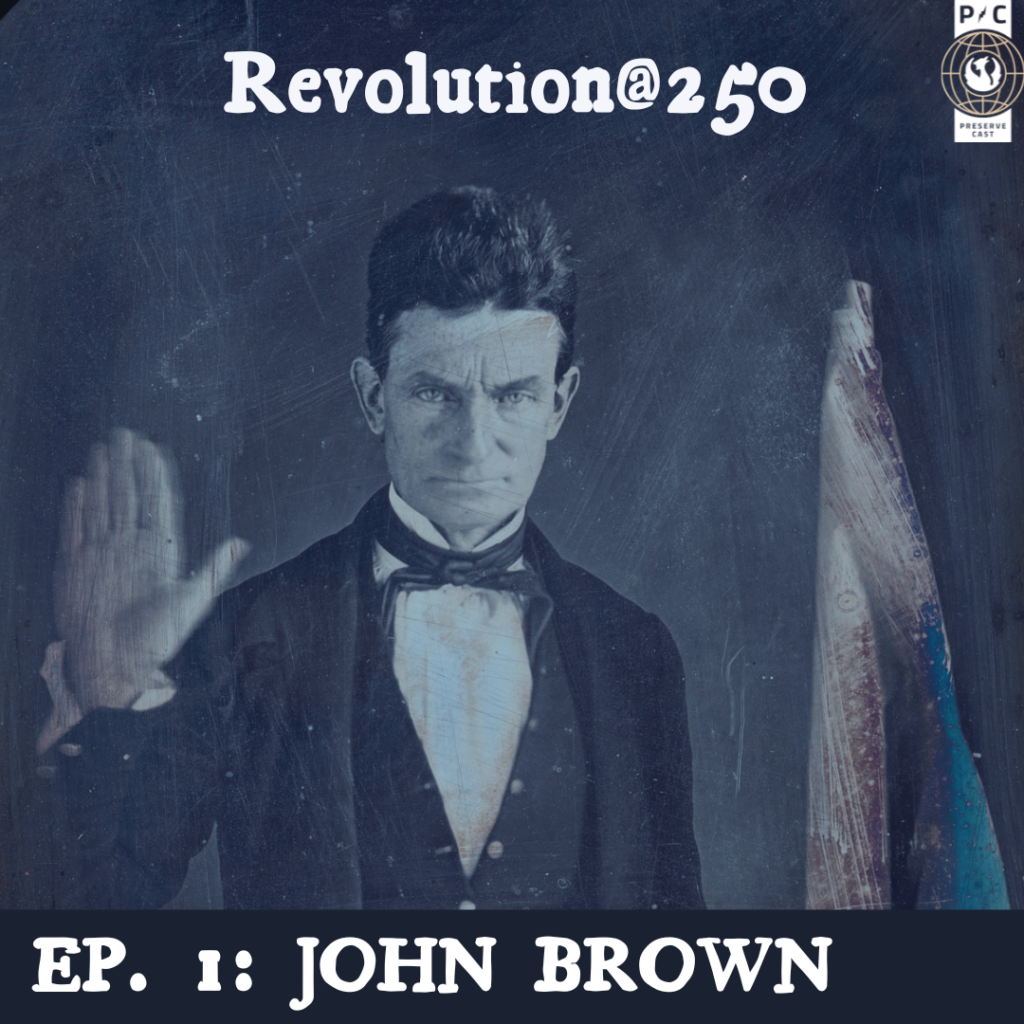
The series opens not in 1776, but with abolitionist John Brown, in conversation with historian Dennis Frye. It’s a deliberate move — using Brown’s raid to ask how far “revolutionary” ideals about equality had (or hadn’t) been carried out three generations after independence.
Episode 2: Washington’s Resignation
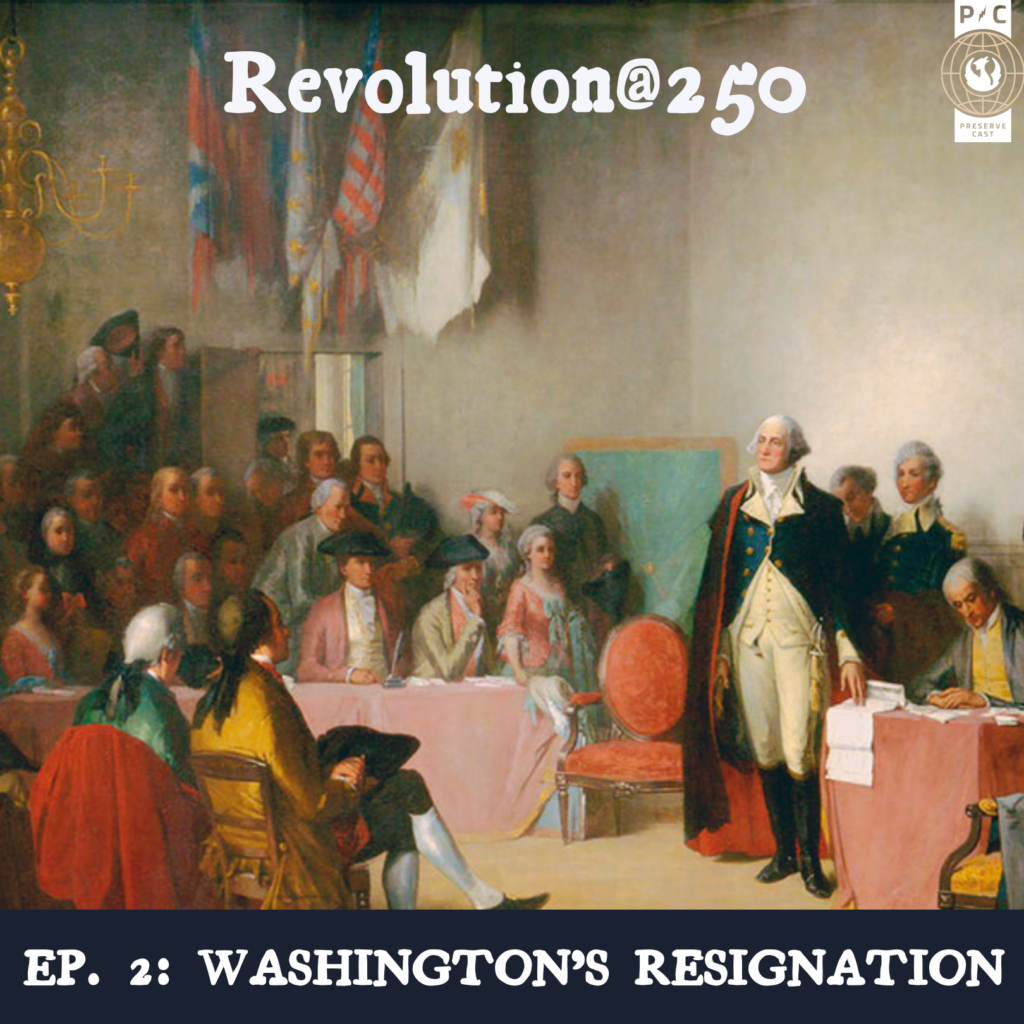
A quieter but arguably more radical moment: on December 23, 1783, in the Maryland State House in Annapolis, George Washington voluntarily resigned his military commission — handing back power that, in the 18th century, almost no one handed back. Guest Dr. Lindsay Chervinsky, presidential historian and Executive Director of the George Washington Presidential Library, unpacks how that single act helped set the precedent for civilian control of the military and shaped the very idea of American leadership.
Episode 3: The Postmaster Who Printed a Revolution
The story of Mary Katharine Goddard, one of the first women to run a newspaper in American history and Baltimore’s postmaster starting in 1775. Goddard printed vital revolutionary documents — including a widely distributed printing of the Declaration of Independence — from her Baltimore print shop. Guest: Christy Pottroff, Ph.D.
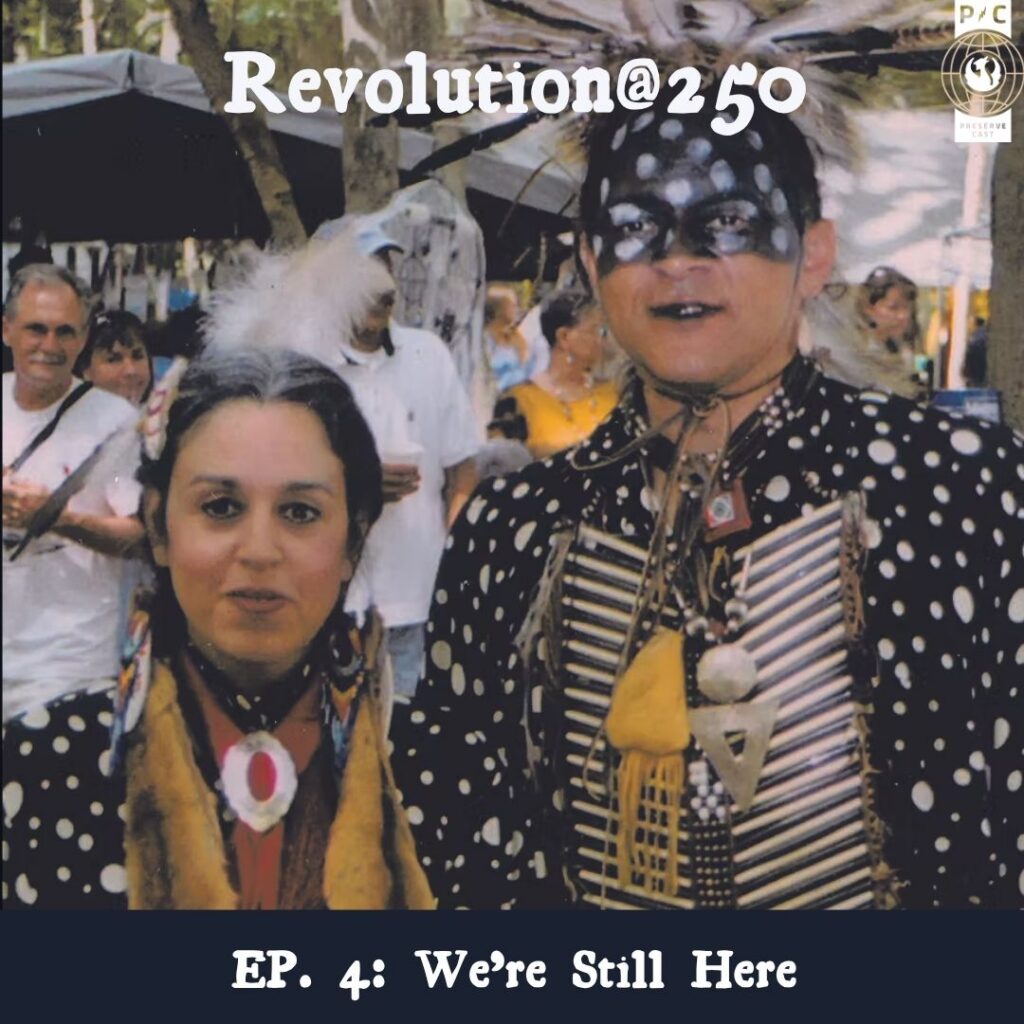
Episode 4: We’re Still Here
Anjela Barnes, a member of the Piscataway community and Executive Director of the Accokeek Foundation at Piscataway Park, joins to discuss the history and ongoing significance of Piscataway homelands — from 1960s–70s activism to the legacy of leaders like Turkey Tayac — and what Indigenous presence and persistence look like at America’s 250th.
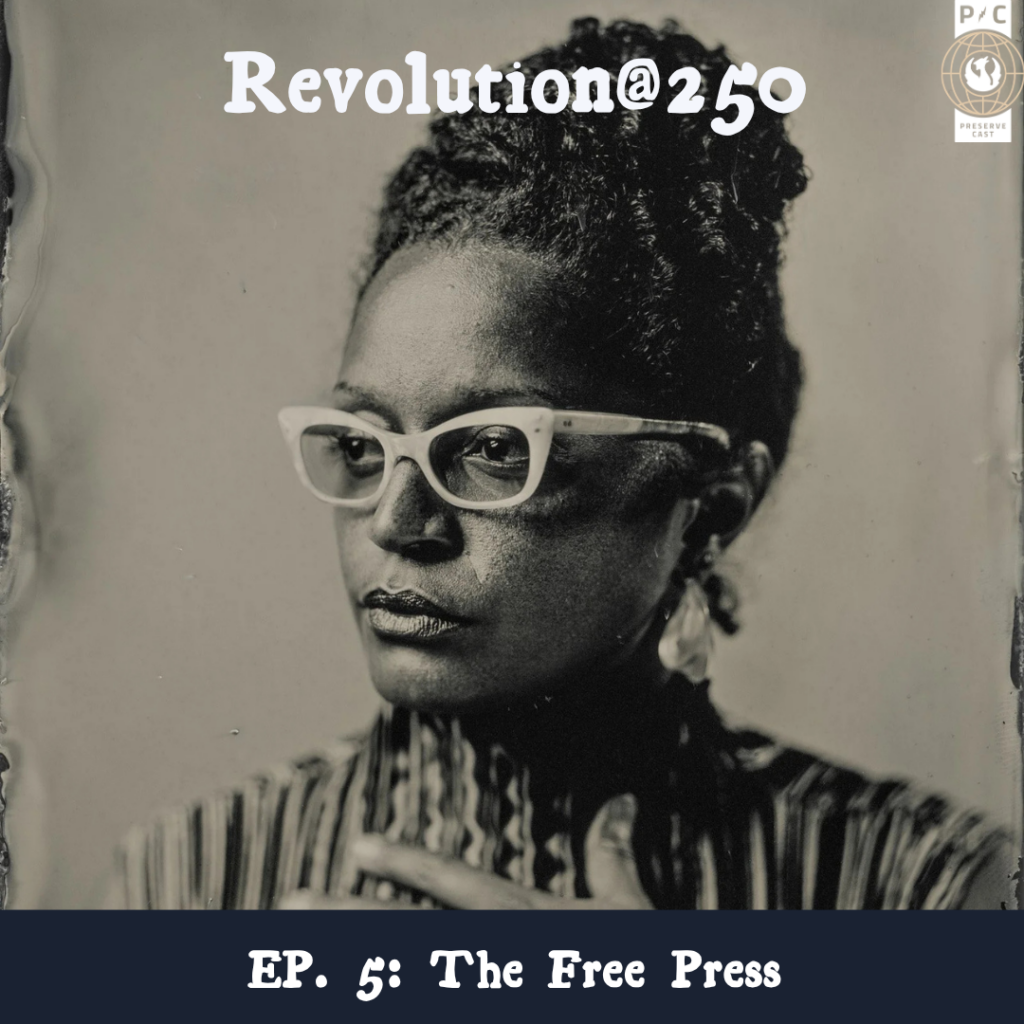
Episode 5: The Free Press
A look at freedom of the press through the lens of the Baltimore Afro-American, the longest continuously running African-American family-owned newspaper in the country, founded in 1892. Guest Savannah Wood, Executive Director of Afro Charities, discusses the newspaper’s founding, its 130+ years of archives, and how Black Marylanders adapted a revolutionary-era ideal — free expression — into a tool for community-building and documentation.
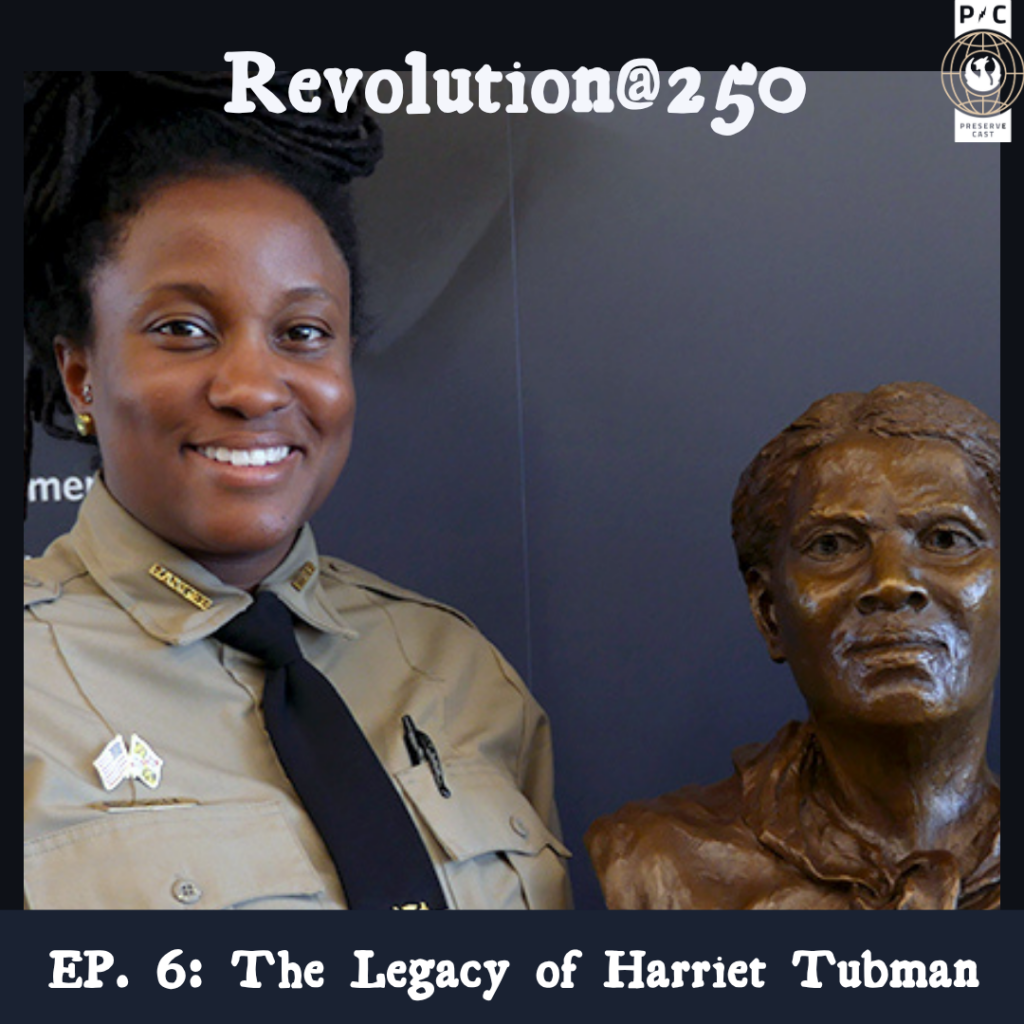
Episode 6: The Legacy of Harriet Tubman
Harriet Tubman’s courage is well known, but this episode focuses on something less often told: how her early life on Maryland’s Eastern Shore — its landscape, waterways, and hiding places — shaped the skills and resilience that let her escape slavery and repeatedly return to lead others to freedom. Guest Angela Crenshaw, Director of the Maryland Park Service, discusses why place matters to preserving this history, how Tubman’s faith guided her life’s work, and how Maryland’s parks and historic sites are working to keep her story — and the broader story of freedom and self-determination — alive for new generations.
__
Revolution@250 is a strong example of how a state’s Semiquincentennial programming can go beyond flag-waving and battlefield reenactments—though Maryland certainly has those too, as seen in the Maryland 250 Commission’s statewide slate of events.
By pairing a preservation organization with a history and culture center, and by centering guests and topics that move beyond the familiar cast of Founding Fathers, the series makes a broader argument: the “revolutionary idea” at the heart of 1776 has never been static. It continues to be interpreted, challenged, and expanded by everyday Marylanders whose stories shape the meaning of freedom today.
New episodes will continue through 2026, aligning with the broader Semiquincentennial commemorations taking place across the state.
Follow along at preservecast.org or subscribe wherever you get your podcasts.