
A Preservation Maryland advocacy effort helped turn a preservation challenge into a new tool for revitalizing Maryland’s largest historic properties.
Across Maryland, former government complexes have sat vacant or underused, often requiring millions of dollars in investment before they can once again serve their communities. In 2019, Preservation Maryland’s advocacy team joined elected officials and other stakeholders to ask a deceptively simple question: What should Maryland do with these large, vacant historic complexes?
That question ultimately helped lead to the creation of the Catalytic Revitalization Tax Credit, a state incentive designed to help close the financing gap for the adaptive reuse of these challenging properties.
Now, the Maryland Department of Housing and Community Development has opened the Fiscal Year 2027 application round of the program, providing another opportunity to put this preservation tool to work.
In 2019, Preservation Maryland participated in a study group examining the future of large, vacant historic government complexes. The group selected three properties as case studies and examined the barriers preventing their redevelopment, from the enormous cost of rehabilitation to environmental and other challenges that can make these projects difficult to finance.
The study produced recommendations for overcoming those barriers. One of those recommendations became the foundation for the Catalytic Revitalization Tax Credit. Preservation Maryland then helped advocate for legislation to turn that recommendation into reality. Senate Bill 885, sponsored by Senator Katie Fry Hester, passed during the 2021 General Assembly session and created the Catalytic Revitalization Tax Credit.
This is a powerful example of what preservation advocacy can accomplish: identifying a statewide problem, bringing the right partners to the table, developing a practical solution, and working with legislators to make that solution part of state policy.
Eligible properties include former state- or federally-owned:
- Colleges and universities
- K–12 schools
- Hospitals and mental health facilities
- Military facilities or installations
To qualify, properties must no longer be in service, and their rehabilitation must contribute to economic, housing, and community development. The program also encourages affordable housing and the preservation of historic properties.
Under the FY27 application round, eligible projects may apply for a tax credit of up to 20% of total eligible project costs, capped at $15 million. Credits can be claimed over the first five years after a project is placed in service or spread across multiple phases.
That kind of investment can make the difference between a property remaining vacant and a historic campus becoming an active part of its community again.
Since the program was established, the state has awarded Catalytic Revitalization Tax Credits to three major redevelopment projects:
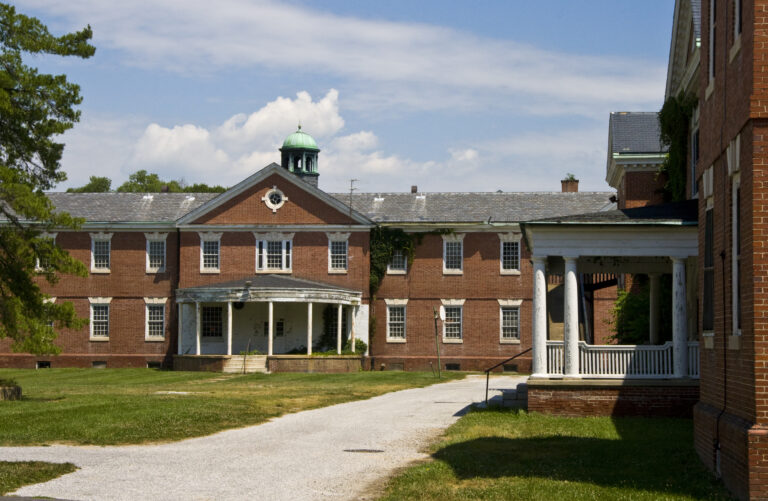
- Springfield Hospital Center in Sykesville is being transformed into a mixed-use residential and commercial hub in Carroll County.
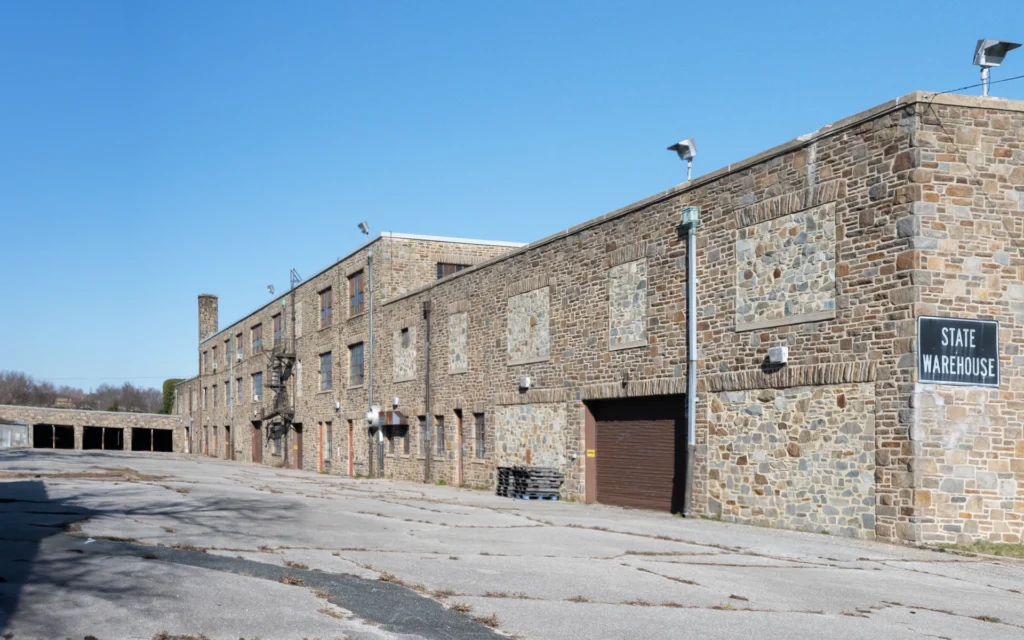
- Fort Ritchie in Washington County, a former military installation that closed in 1998, is being redeveloped through the adaptive reuse of its historic stone buildings for retail and manufacturing, along with new infill housing.
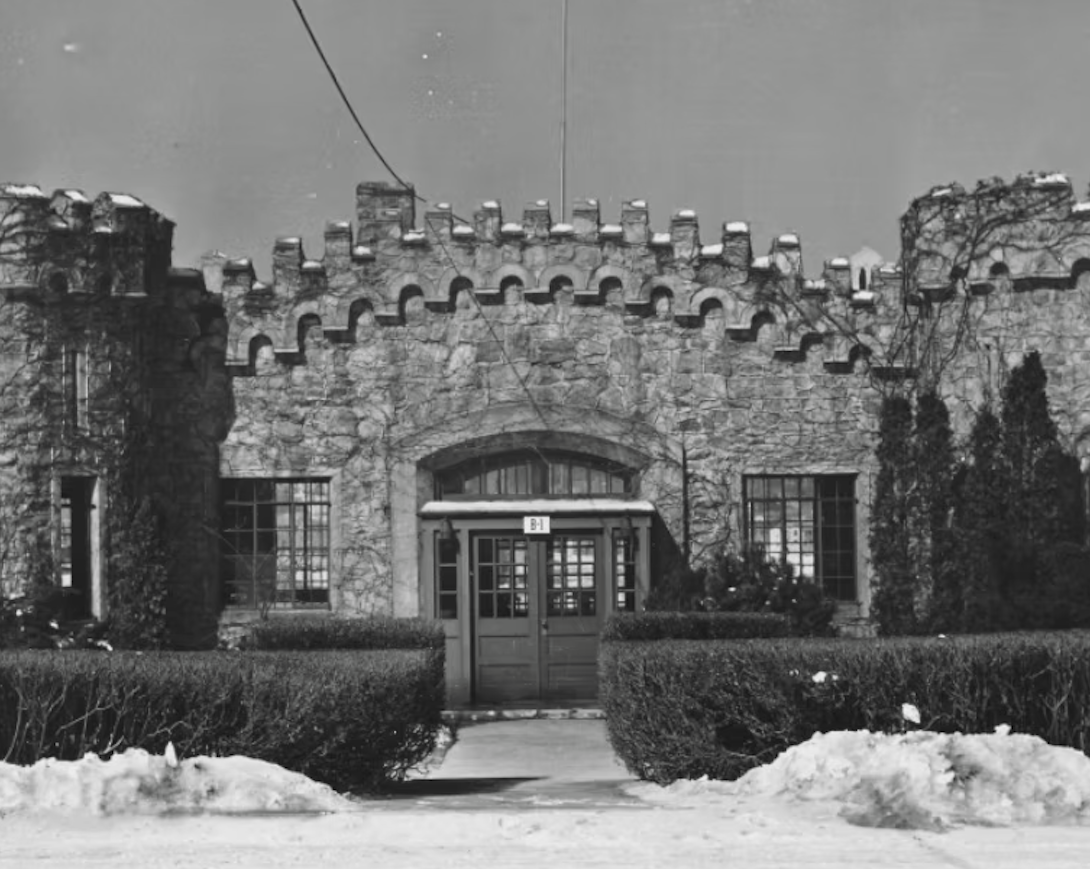
- Pikesville Armory in Baltimore County is being revitalized as a community campus with housing, public recreation and arts spaces, retail, and intergenerational community services.
The opening of another application round is also a reminder that good public policy can have an impact long after a bill is signed into law.
Preservation Maryland continues to advocate for effective preservation tools and for policies that recognize the economic, cultural, and community value of historic places. In 2023, we supported legislation to reauthorize the catalytic tax credit and create a state team focused on the disposition and preservation of state-owned historic resources.
And in 2026, Preservation Maryland advocated for expanding the credit beyond its original focus on former government complexes to make additional historic resources eligible.
The FY27 application period is now open. Applications for the Catalytic Revitalization Tax Credit must be submitted by 5:00 p.m. ET on Thursday, October 1, 2026.
Learn more about the Catalytic Revitalization Tax Credit and the FY27 application round